Places
Layyah
About this place
Layyah is a historic district of southern Punjab and an important part of the Saraiki cultural region. Located between the Indus River and the sandy landscapes of the Thal Desert, Layyah is known for its agricultural communities, desert environment, Sufi heritage, folk traditions and long history connecting it with the wider Derajat and southern Punjab region.
GEOGRAPHY & LOCATION
Layyah District lies in southern Punjab and forms part of Dera Ghazi Khan Division. The district covers approximately 6,291 square kilometres according to the official district profile.
The Indus River runs along the western side of the district, while extensive sandy areas and the Thal Desert shape much of its eastern and central landscape.
The district consists of three tehsils:
• Layyah
• Karor Lal Esan
• Choubara
Layyah city serves as the district headquarters.
THE INDUS RIVER
The Indus is one of the defining geographical features of Layyah.
The river supports agriculture, influences settlement patterns and creates a distinctive riverine landscape along the western side of the district.
Its proximity has also made parts of Layyah vulnerable to flooding and river erosion, while the fertile land near the river supports farming communities.
THAL DESERT
The Thal Desert is one of the most distinctive landscapes associated with Layyah.
Large areas of the district contain sand dunes, dry plains, scrub vegetation and desert-like terrain. Choubara Tehsil in particular contains extensive sandy and forested areas.
The Thal landscape has influenced local agriculture, livestock raising, settlement patterns and traditional ways of life.
HISTORY & FOUNDATION
According to the official district history, Layyah town was founded around 1550 by Kamal Khan, a Mirani Baloch and a descendant of Ghazi Khan, the founder associated with Dera Ghazi Khan.
Around 1610, control of the town passed from the Mirani rulers to the Jaskani Balochs, who remained influential in the area until the late eighteenth century.
During the Durrani period, Layyah became connected with the wider political administration of the region.
In 1794, Humayun Shah, a rival claimant to the Kabul throne, was captured near Layyah and brought to the town.
SIKH & BRITISH PERIODS
During Sikh rule, Layyah once again became an administrative centre for the surrounding territory.
Following the British occupation of the region in 1849, Layyah temporarily became the headquarters of a civil administrative division.
Its administrative status subsequently changed, and the town was reduced to a tehsil headquarters and incorporated into changing district arrangements.
In 1901, Layyah was transferred to the newly created Mianwali District. It was later incorporated into Muzaffargarh District.
DISTRICT STATUS
Layyah was upgraded to a separate district in 1982.
The new district consisted of three tehsils: Layyah, Karor Lal Esan and Choubara.
The establishment of the district gave Layyah a renewed administrative role within southern Punjab and the Dera Ghazi Khan Division.
SARAiki LANGUAGE & CULTURE
Layyah is firmly connected with Saraiki language and culture.
The 2023 Census recorded approximately 1.41 million residents of Layyah District reporting Saraiki as their mother tongue. The district's total population was 2,102,361.
Saraiki is widely used in homes, markets, villages, poetry, folk music, storytelling and everyday communication.
The language forms an important part of Layyah's cultural identity and connects the district with the wider Saraiki belt of southern Punjab.
LAYYAH CITY
Layyah city is the administrative and commercial centre of the district.
The city contains government offices, markets, schools, colleges, hospitals, businesses and residential neighbourhoods.
Its urban development remains closely connected with the surrounding agricultural communities and villages.
KAROR LAL ESAN
Karor Lal Esan is one of the district's three tehsils.
The area combines agricultural settlements with the sandy landscapes of the Thal region and has a long association with local religious and cultural traditions.
CHOBARA
Choubara is the largest of the district's desert-oriented areas.
Much of the tehsil contains sand dunes, rangelands and forested areas managed for environmental purposes.
The landscape provides an important example of the transition between cultivated southern Punjab and the Thal Desert.
AGRICULTURE
Agriculture is one of the main occupations in Layyah.
The district has extensive cultivated and irrigated land, with farming supported by canals, tube wells and riverine water resources.
Major crops include wheat, cotton, sugarcane and various seasonal crops.
The combination of irrigated farmland and Thal agriculture gives Layyah a diverse agricultural landscape.
LIVESTOCK
Livestock is an important part of rural life.
Cattle, buffaloes, goats, sheep and other animals are raised by farming communities.
Livestock provides milk, meat, agricultural support and additional household income.
The official district profile records livestock as one of the major components of the local economy.
COTTON & AGRICULTURAL INDUSTRY
Cotton production has historically been important to Layyah's economy.
The district has numerous cotton-ginning facilities, along with rice factories, flour mills, oil mills, cold-storage facilities and other agricultural industries.
These industries connect rural production with local markets and processing centres.
RICE & FOOD PROCESSING
Rice processing is another part of the district's agricultural economy.
Local factories process rice and other agricultural products produced within Layyah and neighbouring districts.
Food processing and agricultural storage help support the region's farming communities.
CLIMATE
Layyah has a hot and generally dry climate.
The official district administration describes the area as having a desert climate, with extremely hot summers and comparatively cold winters.
Summer temperatures can become exceptionally high, while the sandy landscape and limited rainfall contribute to the region's arid character.
The climate strongly influences agriculture, water use and everyday life.
DESERT LIFE
Life in the Thal region has traditionally adapted to limited rainfall and sandy terrain.
Livestock raising, seasonal cultivation, groundwater use and movement between settlements have all been important elements of life in the desert areas.
The landscape also supports distinctive local knowledge concerning water, livestock and desert vegetation.
SUFI & SPIRITUAL HERITAGE
Layyah has a strong tradition of Sufi and spiritual culture.
Shrines, khanqahs and religious gatherings form an important part of the cultural landscape.
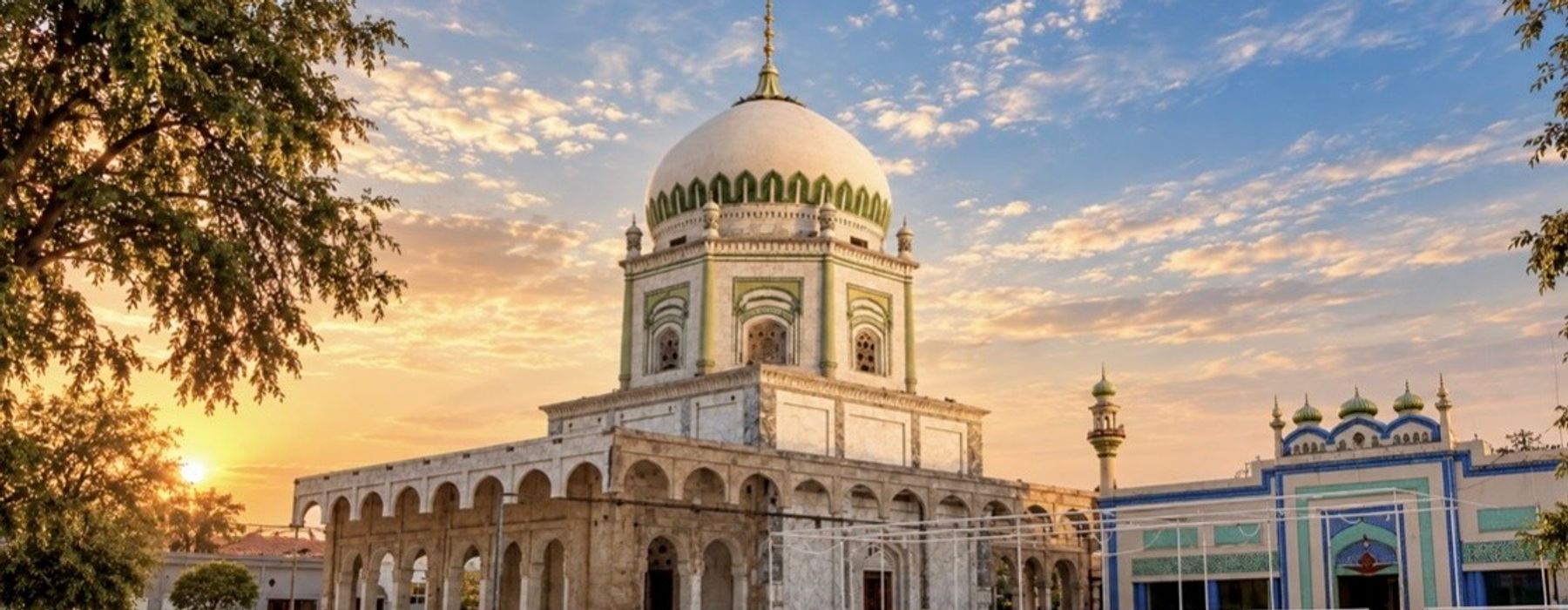
One notable figure associated with the district is Khawaja Ghulam Hassan Sewag Shareef, whose shrine is located near Hasanabad Thal in the Karor Lal Esan area.
According to the official district website, he established a Sufi khanqah in Hasanabad Thal and died in 1939. His annual Urs continues to be observed as a religious gathering.
SHRINES & URS TRADITIONS
Annual Urs gatherings bring together communities for religious observance, prayer and remembrance.
Such traditions form part of the wider spiritual culture of southern Punjab, where shrines have historically served as important social and religious spaces.
FOLK MUSIC
Saraiki folk music is an important part of cultural life in Layyah.
Traditional forms such as kafis, dohras and folk songs are performed at weddings, family gatherings, cultural events and community celebrations.
The district shares musical traditions with neighbouring Dera Ghazi Khan, Muzaffargarh, Multan, Bhakkar and other areas of the Saraiki region.
POETRY & ORAL TRADITIONS
Poetry and oral storytelling remain important elements of Saraiki culture.
Themes of love, separation, spirituality, nature, rural life and the desert landscape frequently appear in regional poetry and folk expression.
Stories and verses passed between generations continue to preserve memories of local communities and traditions.
TRADITIONAL DRESS
Traditional clothing in Layyah reflects the wider dress culture of southern Punjab.
Men commonly wear shalwar kameez, with regional turbans and traditional styles particularly visible in rural communities and cultural gatherings.
Women wear colourful shalwar kameez, embroidered garments and regional textiles.
HANDICRAFTS
Traditional crafts remain connected with rural life.
Embroidery, woven textiles, decorative work, pottery and other handmade crafts reflect the broader craft traditions of southern Punjab and the Thal region.
FOOD CULTURE
Layyah's food culture reflects its agricultural and pastoral economy.
Traditional meals include wheat-based breads, rice dishes, vegetables, pulses, meat and dairy products.
Fresh seasonal fruits and locally produced agricultural products also contribute to everyday cuisine.
MARKETS & TRADE
Layyah city and the major tehsil towns serve as commercial centres for surrounding villages.
Agricultural products, livestock, food items, clothing, household goods and farming supplies are traded through local markets.
The district's road network connects these markets with larger commercial centres in southern Punjab.
INDUSTRY
Layyah has developed a modest industrial sector closely connected with agriculture.
The official district profile records a sugar mill, rice factories, cotton-ginning factories, oil mills, flour mills, ice factories, cold-storage facilities and other industrial units.
Brick kilns are also present across the district.
EDUCATION
Education has expanded significantly across Layyah.
The district administration reports more than 1,500 government schools across primary, middle, high and higher-secondary levels.
Public and private colleges provide opportunities for further education, while higher-education institutions have expanded access to university-level study.
HEALTHCARE
Layyah has a network of hospitals, rural health centres, basic health units and dispensaries.
The district headquarters hospital and tehsil-level facilities serve urban and rural communities across the three tehsils.
TRANSPORT & CONNECTIVITY
Layyah is connected by road with major cities and districts of southern Punjab.
Its location between the Indus River and the Thal region gives it an important role in regional movement between Dera Ghazi Khan, Muzaffargarh, Bhakkar and other parts of Punjab.
Roads connecting the district's villages and markets are particularly important for agricultural transportation.
NATURAL ENVIRONMENT
Layyah contains several distinct ecological environments.
These include riverine areas along the Indus, irrigated agricultural land, dry plains, sandy terrain, rangelands and forested areas.
This environmental diversity makes the district different from many other parts of southern Punjab.
DESERT & FOREST LANDSCAPES
Choubara's sandy terrain and forested areas form an important environmental feature of the district.
The landscape provides habitat for native plants and animals and contributes to the ecological character of the Thal region.
FLOODS & WATER
While parts of Layyah depend on irrigation for agriculture, the district also faces environmental risks from flooding and river erosion.
The Indus River and seasonal water flows can affect settlements and farmland.
Disaster-management projects in the district have therefore included flood resilience and climate-related initiatives.
LIVING HERITAGE
Layyah's heritage is not limited to old buildings or historical events.
Its living heritage can be found in the Saraiki language, village traditions, agricultural practices, Sufi gatherings, folk music, poetry, food, dress and relationships between communities and the desert landscape.
MODERN LAYYAH
Today, Layyah is a growing district with more than 2.1 million residents according to the 2023 Census.
Agriculture remains central to the economy, while education, healthcare, commerce, industry and public services continue to expand.
The district maintains strong connections with its historical past while developing as a modern part of southern Punjab.
LAYYAH & SARAIKISTAN
Layyah represents an important part of the wider Saraiki cultural landscape.
Its history connects it with the Mirani and Jaskani periods, the political history of Multan and Derajat, Sikh and British administration, and the formation of modern southern Punjab.
Its geography connects the Indus River with the Thal Desert.
Its culture connects Saraiki language with Sufi traditions, folk music, poetry, agriculture and rural life.
From the riverbanks of the Indus to the sandy landscapes of Choubara, Layyah is a region where desert, river, agriculture and Saraiki culture meet.
It is a living part of Saraikistan's history, culture and heritage.