Culture
Saraiki Crafts & Ajrak
About this tradition
Saraiki Crafts & Ajrak
Saraiki culture is rich in traditional crafts shaped by the region’s history, landscape and everyday life. From woven textiles and embroidered fabrics to pottery, woodwork and handmade household objects, these crafts carry patterns and techniques passed from one generation to another.
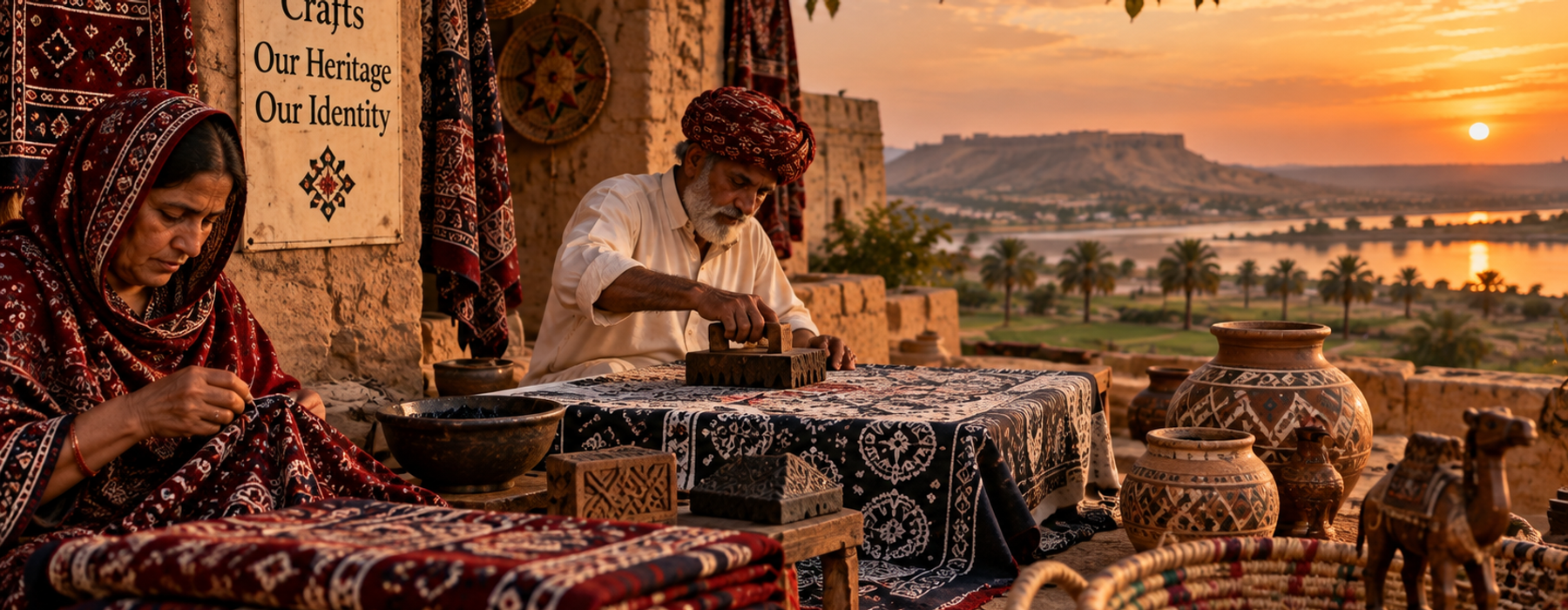
Ajrak is among the most recognizable textile traditions associated with the wider cultural landscape of southern Punjab and Sindh. Its deep colors, geometric patterns and repeated motifs have become an important part of regional clothing and visual identity. Traditionally, such textiles are valued not only for their beauty but also for the skill and patience required to produce them.
Handcrafted pottery is another important part of the region’s material culture. Local artisans have traditionally worked with clay to create vessels, decorative objects and everyday utensils, often incorporating distinctive geometric and natural patterns.
Embroidery, weaving, basketry and other forms of handmade work have also played an important role in village life. Many crafts were historically produced within homes and small workshops, with knowledge shared between parents, grandparents and younger generations.
These traditions represent more than decorative art. They preserve stories, symbols and techniques that connect contemporary Saraikis with their cultural heritage. Supporting local artisans and documenting traditional craftsmanship can help ensure that these skills continue to be practiced and appreciated by future generations.
Crafts are a living part of Saraikistan’s cultural identity — shaped by the hands of its people and carried forward through generations.