Singers
Mansoor Malangi
Biography
Mansoor Ali Malangi (1947–2014) was a Pakistani folk singer, poet and composer whose music became associated with Punjabi, Saraiki and Urdu folk traditions. Born on January 1, 1947, in Garh More village of Jhang District, he grew up in a musical family. His father, Pathan Ali, was a trained vocalist and sarangi player, and Mansoor developed an interest in singing from an early age.
According to accounts published by Dawn and the Associated Press of Pakistan, Malangi began singing as a child and received early musical training from his father. He later travelled to Lahore, where he continued his musical development and received training from music composer Baba Chishti.
Malangi's first song was broadcast by Radio Pakistan in 1965, when he was about 18 years old. His major breakthrough came during the 1970s with “Ik Phul Motiye Da Maar Ke Jaga Sohniye.” The song became widely popular and established him as a prominent folk voice. His recordings subsequently reached audiences throughout Pakistan and among Pakistani communities abroad.
His repertoire included folk songs, dohras and mahiyas, while he also performed poetry and compositions connected with the wider Punjabi and Saraiki literary traditions. He was particularly associated with songs expressing love, separation, longing and rural life. He also sang the poetry of Sufi poet Khwaja Ghulam Farid, including works such as “Akh Phurkandi Ae,” “Guzar Gaya Din Sara,” “Ronday Umar Nibhai” and “Wich Rohi De.”
Among the songs associated with his career are “Ik Phul Motiye Da Maar Ke Jaga Sohniye,” “Kala Til Mahi Da,” “Balocha Zalman,” “Kehri Ghalti Hoi Ae Zalim” and “Khan Ghara De.” He also sang in Urdu and Sindhi and worked as a composer as well as a vocalist.
Malangi was known for bringing his own style and expression to traditional folk forms. Dawn reported that he helped popularise the Punjabi dohra and gave a distinctive character to the mahiya. His recordings were widely heard across Punjab, including in rural communities and among people travelling on Pakistan's roads.
Over the course of his career, Malangi recorded more than 200 audio albums, according to Dawn. He also performed on radio and television and appeared at musical events in Pakistan and abroad. His music continued to be performed and remembered by students, fellow musicians and listeners after his death.
His contribution to folk music was recognised with the Tamgha-i-Imtiaz in 2012. The award reflected his long career and contribution to Pakistani music.
Mansoor Ali Malangi died on December 10, 2014, in his native Garh More after suffering a heart attack. He was 67 years old. His death was followed by tributes from musicians, literary figures and cultural organisations. At a memorial event held at the Multan Arts Council, his students and fellow artists performed some of his best-known songs and recalled his influence as a folk performer.
Mansoor Ali Malangi remains part of the recorded heritage of Pakistani folk music. His songs, particularly those rooted in Punjabi and Saraiki poetic traditions, continue to be remembered by listeners and performers, preserving his contribution to the folk musical culture of South Punjab and the wider Punjab region.
Image Credits+
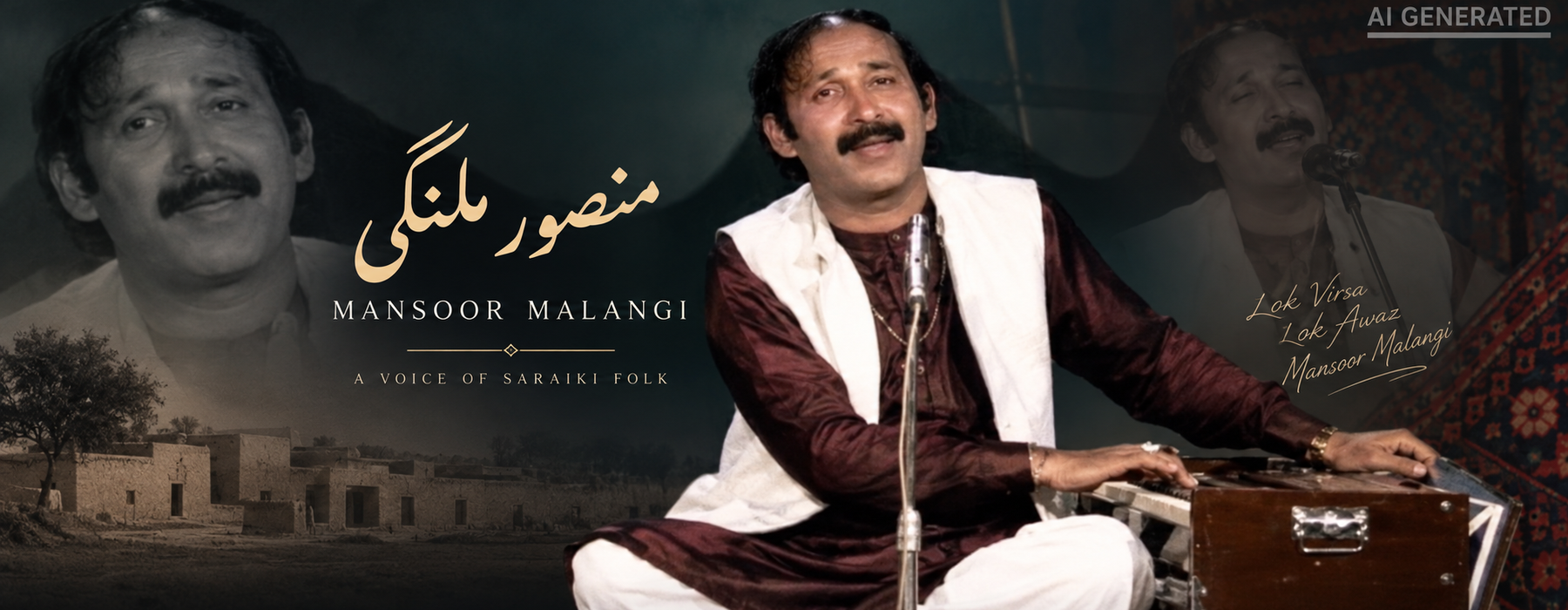
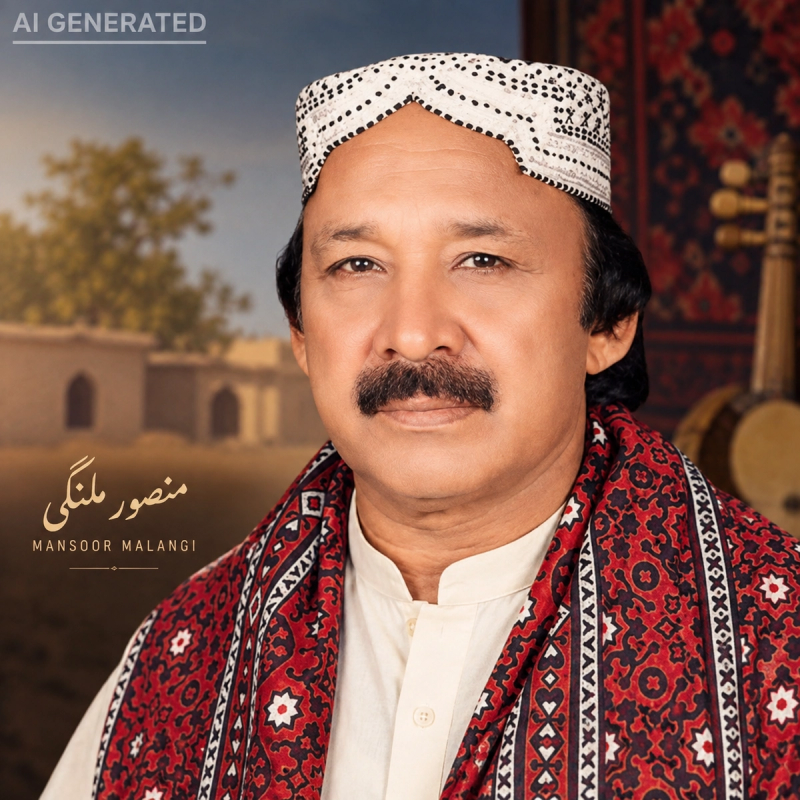
AI-GENERATED IMAGES Profile Picture: AI-generated portrait created for Saraikistan. This is an artistic reconstruction and is not a historical photograph. Cover Picture: AI-generated editorial cover artwork created for Saraikistan. The depicted scene is an artistic reconstruction and should not be understood as a documented historical event. Both images are clearly labeled “AI GENERATED” on the artwork.