
Singers
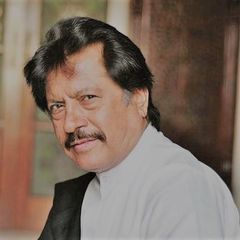
Attaullah Khan Esakhelvi
Biography
Attaullah Khan Esakhelvi, born on 19 August 1951 in Esakhel, District Mianwali, is a Pakistani folk singer whose extensive career has made him one of the widely recognized voices associated with Saraiki folk music. He is also known simply as Attaullah Khan or Lala. Radio Pakistan describes him as a popular folk singer and notes that his repertoire includes Saraiki, Punjabi and Urdu music.
Attaullah developed an interest in music during childhood, although singing was discouraged in his family. According to biographical accounts published by the Associated Press of Pakistan, he eventually left home and continued pursuing music, performing in local villages while recordings of his performances circulated among listeners.
His professional career began gaining wider attention in the early 1970s. In 1972, he was invited to perform for Radio Pakistan Bahawalpur, and in 1973 he appeared on the popular television programme Neelam Ghar. He later travelled to Faisalabad to record folk songs professionally, where he recorded four albums during a single recording session. Those albums were released toward the end of 1977 and became national bestsellers, according to APP.
His music became particularly associated with songs expressing love, separation, sorrow, pain and heartbreak. His distinctive voice and emotionally direct style helped his recordings reach audiences well beyond the Saraiki-speaking region. His repertoire has included songs in Saraiki as well as Punjabi and Urdu, reflecting the linguistic range of his career.
Among songs frequently associated with Attaullah Khan Esakhelvi are “Qameez Teri Kaali,” “Raatan,” “Mahi Wasey Mera,” “We Bol Sanwal,” “Theva Mundri Tha Theva,” and “Ither Zindagi Ka Janaza.” His recordings have circulated widely in Pakistan and among overseas audiences.
Attaullah’s international career expanded in 1980, when he performed in the United Kingdom for the first time. APP reports that his music was subsequently released in the UK under different labels. His extensive recording output also became part of his public legacy, with APP reporting that he had recorded tens of thousands of songs in seven languages and that his name entered the Guinness Book of World Records in 1994 in connection with the number of audio albums released.
The Government of Pakistan awarded Attaullah Khan Esakhelvi the Pride of Performance in 1991 in recognition of his contribution to music. In 2019, he received the Sitara-i-Imtiaz among the recipients of Pakistan’s civil awards.
Attaullah Khan Esakhelvi remains an important name in discussions of Pakistani folk music and the recorded history of Saraiki music. His long career, extensive discography and distinctive vocal style have helped carry regional folk traditions to audiences across Pakistan and abroad.
Gallery
Photos
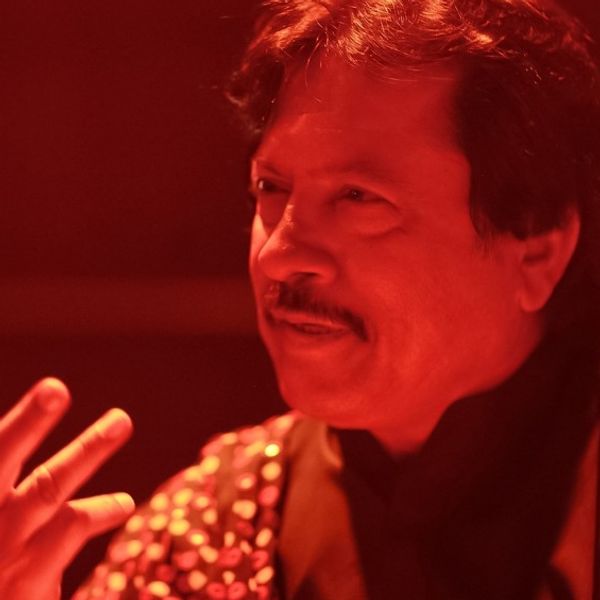
Image Credits+
PROFILE PICTURE / SEO IMAGE Photo: Attaullah Khan Niazi Source: Wikimedia Commons File: Atta-Ullah-khan-esakhelvi.jpg License: CC BY 4.0 https://commons.wikimedia.org/wiki/File:Atta-Ullah-khan-esakhelvi.jpg COVER IMAGE Photo: Pakwaseb Source: Wikimedia Commons File: Attaullah_Khan_Esakhailvi.JPG License: CC BY-SA 3.0 https://commons.wikimedia.org/wiki/File:Attaullah_Khan_Esakhailvi.JPG GALLERY IMAGE Photo: Harmail819 Source: Wikimedia Commons File: Attaullahkhanesakhelvi.jpg License: CC BY-SA 3.0 https://commons.wikimedia.org/wiki/File:Attaullahkhanesakhelvi.jpg